
The physicist who can explain how positive thinking works.
Harness the Power of Positive Thinking
The purpose of the three books in the Ordaining Reality Series is to explain the underlying laws of nature supporting the theory that positive thinking produces positive results. This knowledge will significantly enhance your ability to bring about desired changes in your life.
Welcome to the Ordaining Reality Series. These three books explain how thoughts, desires, and prayers tangibly influence physical nature and alter future occurrences. There are three books in this series; each is designed for a specific audience.
Which Edition is Right for You?
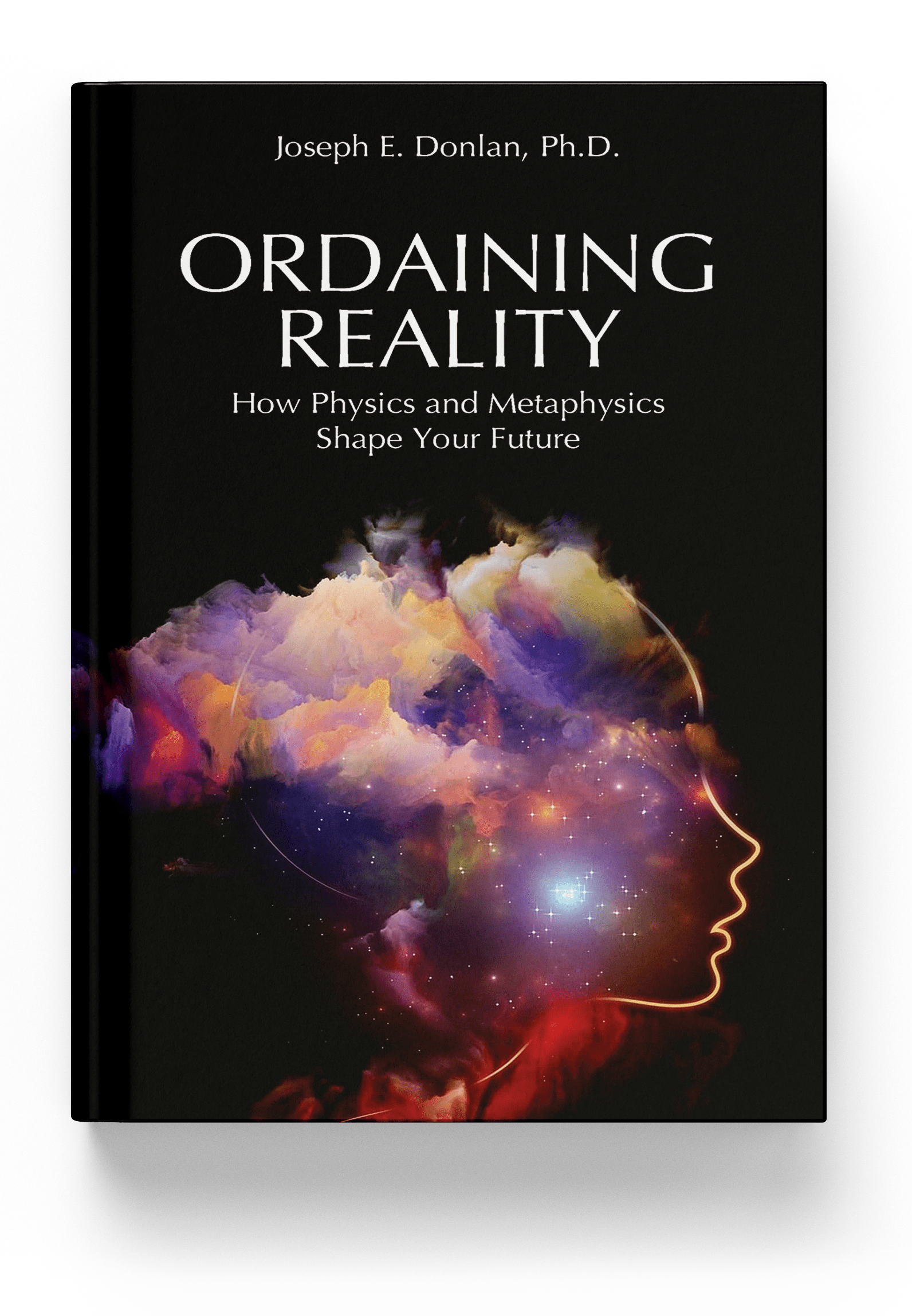
If you are a physicist or metaphysician, have a keen interest in physics or metaphysics, a deeply inquiring mind, and want to be exposed to concepts that have teased mankind for millennia, you should opt for the latest book, Ordaining Reality: How Physics and Metaphysics Shape Your Future.
If you yearn to understand how thoughts create reality, but do not wish to wade through as many pages of scientific information, then you should select the second, moderately abridged version, Ordaining Reality Made Easy: A Guide for Creating the Future.
If you want to understand the relationship between thoughts and outcomes, but you wish to limit yourself to the salient underlying details, you should select the newest, highly abridged member: Ordaining Reality In Brief: The Shortcut to Your Future.
As another aid in making your selection, you can review the extensive feedback on the blog, which is provided by readers of all three books.
The Mission
This Trilogy of books was written to empower readers from every background with the ability to create, or at the very least, strongly influence their own future in a positive manner. Each edition explains why you must have total faith in your desired outcome and why this certitude requires understanding how the future-creating phenomenon works within the accepted laws of science.
Précis
These three books explain the underlying physics at play when you envision a future, and it happens. To accomplish this, they each take the reader through the subject of physics as it is known today and then point out the recognized flaws and problems within its laws.
They also introduce and explain Eastern Philosophy and then tie it into Western Physics. In conjunction with this view, the books explain how the human brain is essentially wired to understand both the Eastern and Western views of reality. Each of these books then ties these notions into a new view of nature–a view which not only solves many of the enigmas facing physicists today, but also supports the ability to create the future with thoughts.
Finally, the last chapter of each book brings the reader through a step-by-step process to put this knowledge to work to help them create their own future.
The Four Hypotheses
The first hypothesis is that there are two co-dependent realms of existence: the physical and the non-physical. The book explains that the physical realm deals with the tangible, material, and concrete aspects of nature. The non-physical concerns are intangible, spiritual, and/or abstract facets. The book refers to these collectively as metaphysical to include everything that is non-definable, non-locatable, and non-measurable by current scientific methods.
The second hypothesis is that the mainstream laws of Western Physics deal exclusively with the physical plane of existence. It is accepted as fact that Western Science is exclusively concerned with entities that can be quantified. As such, The Standard Model (Western Science’s compendium of laws which have evolved from centuries of carefully tested hypotheses) can paint a reasonably accurate picture of most of the known objective, material entities.
However, this compilation of laws cannot address subjective, metaphysical entities, including intangible emotions such as love and hope. Western Science’s response to this exclusion has been that the metaphysical domain is outside the bounds of reality, and it therefore cannot be quantified or rationalized.
The book’s third hypothesis is that Eastern Science and Eastern Philosophy (what the book brands as “Eastern Metaphysics”) embrace the metaphysical realm. Eastern Metaphysics views the physical and metaphysical domains as equally real and codependent.
To explain and support this third hypothesis, the book delves into how the physical and metaphysical realms interact and how these substantively different and behaviorally distinct entities comprise the complementary Eastern concept of yin and yang.
The book’s fourth hypothesis centers around a newly developed construal that identifies and explains important similarities between Western thought and the brain’s left cerebrum hemisphere and Eastern Metaphysics and the right cerebrum hemisphere.
This book introduces and explains how the comprehension of Western and Eastern constructs is primarily processed within only one of the two hemispheres of the cerebrum section of the brain. It extends this fourth thesis to sketch how each hemisphere has evolved to best interpret the physical and metaphysical worlds. This hypothesis helps to explain why Western Science developed into its current form and how we can make use of this knowledge to help us understand reality.
The book employs the foregoing propositions to construct a new view of nature, which will augment portions of the current paradigm of physics known as The Standard Model. As its principal cornerstone, the new interpretation will recognize the existence of the metaphysical realm to help explain many of the enigmas facing contemporary theoretical physicists while rationalizing the occurrence of paranormal events, particularly that of ordaining reality.
To support its propositions and to help compose the new perspective, the book traces the discovery of the newer theories within Western Physics that have unsealed the lid to valid scientific acceptance for the type of paranormal activities I have investigated and experienced. I will also explain why and how the Eastern body of knowledge uniquely views and rationalizes metaphysical phenomena, and, unlike the Western perspective, does not make a hard distinction between the third-person physical and the first-person metaphysical realms of existence.
Much of this book is dedicated to reconciling these contrasting views, and the reward for this knowledge will be a clearer understanding of nature and a significantly greater ability to positively influence events in your life.